 InnerWhispers
Panic Attacks: How They Start, How Severe They Get, and Why They Hurt
A panic attack can feel like a heart attack. What happens in your body, why the chest pain is real, how severe panic can get, what to do in the moment, and when to get help.
Key takeaways
- A panic attack is your body’s alarm system firing when there is no real danger. It peaks within minutes and passes, usually within 10 to 30 minutes.
- The chest pain, breathlessness and tingling are real, caused by tense muscles, adrenaline and fast breathing. They feel terrifying but aren’t dangerous in themselves.
- If chest pain is new, crushing, spreads to your arm or jaw, or doesn’t ease, call 112. Panic is very treatable with therapy and, where needed, medicine.
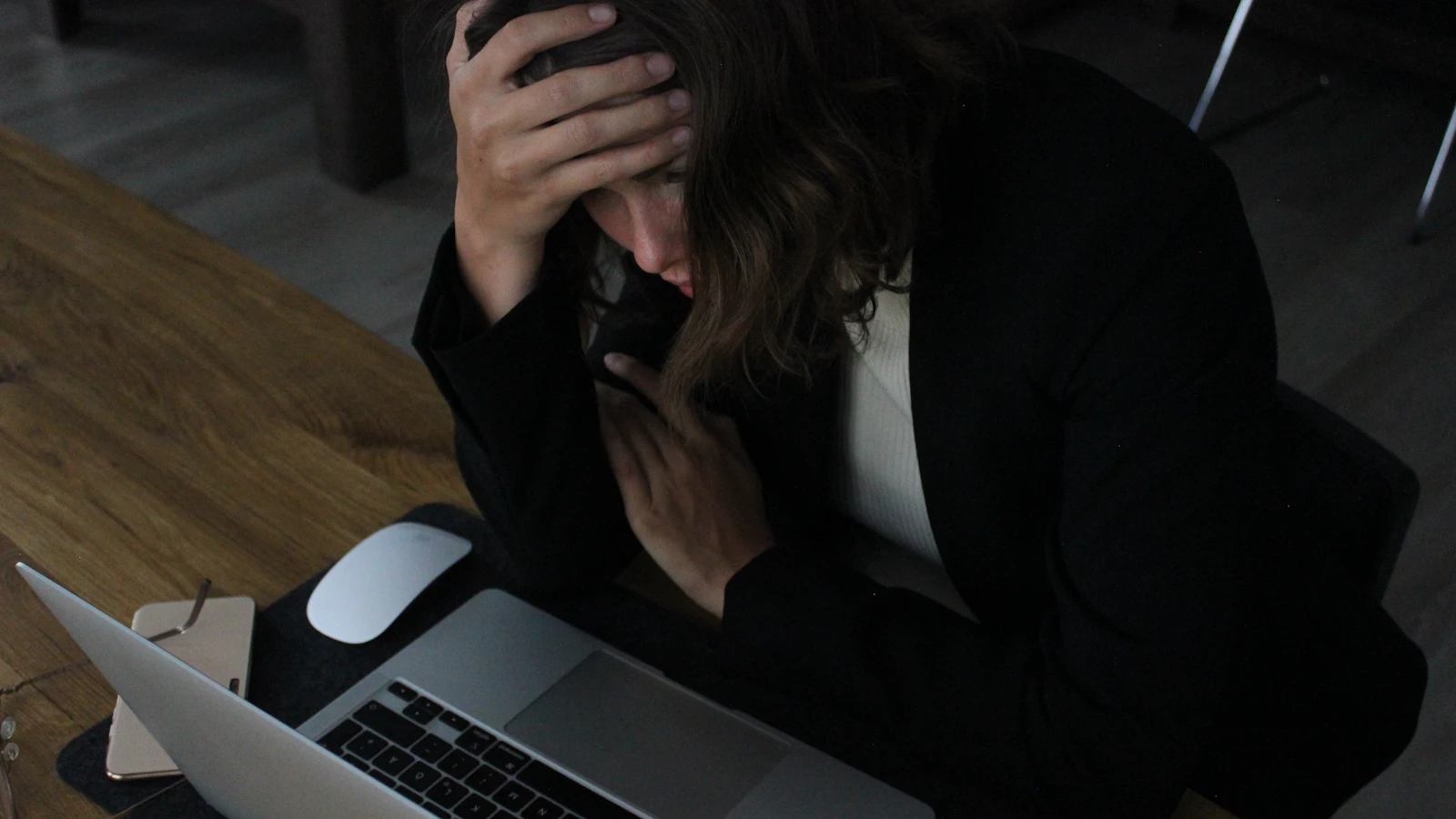
It often comes out of nowhere. You're standing in a queue, lying in bed, or sitting in a meeting, and suddenly your heart is pounding, your chest is tight, you can't get a full breath, and a wave of fear rises so fast that you're sure something is terribly wrong. Many people who have their first panic attack go straight to the emergency room, convinced they're having a heart attack.
If this has happened to you, you're not imagining it, and you're not weak. A panic attack is one of the most intense experiences the body can produce. Here's what is happening, how severe it can get, why it hurts, and what helps.
What a panic attack is
A panic attack is a sudden surge of intense fear or discomfort that peaks within minutes. It comes with strong physical sensations, and often a feeling that you're about to die, lose control or collapse.
It's more common than most people think. Around 1 in 8 people have at least one panic attack in their lifetime. Having one doesn't mean you have a mental illness. For some people it happens once or twice during a stressful period and never again. For others the attacks keep coming back.
Common signs include:
- A pounding, racing or fluttering heart
- Chest pain, tightness or pressure
- Shortness of breath, or feeling you can't get enough air
- A choking feeling or a lump in the throat
- Sweating, trembling or shaking
- Dizziness, light-headedness or feeling faint
- Nausea or stomach churning
- Hot flushes or chills
- Tingling or numbness, often in the hands, feet or around the mouth
- Feeling unreal, or detached from yourself or your surroundings
- Fear of losing control, or of dying
How a panic attack starts
A panic attack is your body's alarm system going off when there is no real danger. That alarm, the "fight or flight" response, evolved to save your life. When the brain senses threat, it floods the body with adrenaline in seconds. Your heart speeds up to pump blood to your muscles, you breathe faster to take in more oxygen, and your senses sharpen. Facing a real threat, this helps. Sitting at your desk, it feels terrifying.
What makes panic so powerful is a loop that feeds itself:
- A spark. Sometimes it's a clear trigger: a crowded place, a stressful thought, a memory. Often it's something small and physical: a skipped heartbeat, a bit of dizziness after standing up, too much tea or coffee, or simply being exhausted.
- The mind reads danger. "Why is my heart doing that? Is something wrong?"
- The alarm fires. Adrenaline rises, and the heart beats even faster.
- The body confirms the fear. The stronger sensations seem to prove the worry: "I'm having a heart attack." "I'm going to faint." "I'm losing my mind."
- More fear, more adrenaline. The loop spins faster until it peaks.
Breathing plays a big part. When you're frightened you breathe fast and shallow without noticing. That lowers the carbon dioxide in your blood, which causes many of the scariest sensations: tingling fingers, dizziness, a tight chest and the feeling that you can't get enough air, even though you're taking in plenty.
Attacks that seem to come "out of the blue" usually have a background. Weeks of stress, poor sleep, grief, a recent illness, cutting down on alcohol, or a lot of caffeine can all leave the alarm system on a hair trigger. Sometimes panic starts at night and wakes you from sleep. That's frightening, but it's a known pattern and it can be treated.
The pain is real
People are often told a panic attack is "all in your head". The fear starts in the brain, but the pain happens in the body, and it is real.
- Chest pain. The muscles between your ribs and across your chest clench hard during panic. Fast breathing makes them work overtime. The pain can be sharp and stabbing, a dull ache, or a heavy pressure, and it can stay sore for a day or two afterwards, like after a hard workout.
- Throat and breathing. Tight throat muscles cause the "lump" or choking feeling, and over-breathing makes it feel like air won't go in.
- Head and stomach. Tension headaches, nausea, cramps and an urgent need for the toilet are common, because adrenaline affects the gut too.
- Pins and needles. Tingling and numbness, sometimes with stiff, cramping hands, come from over-breathing.
There is emotional pain too. In the moment, many people describe a sense of doom, a certainty that they're about to die, that is unlike any ordinary fear. Afterwards comes what people call a "panic hangover": exhaustion, shakiness, a heavy head and low mood that can last for hours. Then, often, comes shame ("Why can't I control this?") and the quiet dread of the next one.
A panic attack feels like dying, but it is not dangerous in itself. It will peak and pass, usually within 10 to 30 minutes.
Is it a panic attack or a heart attack?
This is the most important question, and the honest answer is: you can't always tell on your own. Some differences can help, but none of them is a rule.
| Often more like panic | Often more like a heart problem | |
|---|---|---|
| The pain | Sharp or stabbing, in one spot, worse when you press on it or breathe in | Crushing, squeezing or heavy, across the chest |
| Spreading | Usually stays in the chest | Spreads to the left arm, jaw, neck, back or stomach |
| When it starts | At rest, with fear or stress, or out of the blue | Often with physical effort, and may ease with rest |
| How long | Peaks within about 10 minutes, then fades | Lasts more than 15 to 20 minutes, or keeps getting worse |
| Tingling | In both hands, feet or around the mouth | Less typical |
Call 112 or go to the nearest emergency department straight away if:
- It's your first episode of chest pain, or it feels different from your usual attacks
- The pain is crushing, or spreads to your arm, jaw, neck or back
- It came on with physical effort, or lasts more than 15 minutes
- You faint, or have a known heart condition, diabetes, high blood pressure, or you smoke
- You're over 40 and not sure
Getting checked is never a waste of anyone's time. Once a doctor has ruled out a physical cause, it becomes much easier to trust that the next attack is panic, and to ride it out.
How severe can panic get?
Panic exists on a spectrum. Where someone sits on it depends less on how bad a single attack feels and more on how often attacks happen, and how much fear of them shapes daily life.
- A single attack. One or two attacks during a stressful time, which then stop. This is very common.
- Limited-symptom attacks. Smaller waves with only a few symptoms, like a racing heart and a sense of dread, that pass quickly.
- Panic disorder. Attacks keep coming back unexpectedly, and for a month or more you worry about the next one, or change what you do to avoid it. About 1 to 2 people in 100 live with this.
- Panic with agoraphobia. Fear of an attack starts to shrink your world. You avoid buses, malls, cinemas, queues, driving, or being far from home or a hospital. Some people stop leaving the house alone.
Signs that panic is becoming more serious include:
- Attacks more than once a week, or getting more frequent
- Anticipatory anxiety: worrying for hours or days about having another attack
- Avoiding places, travel, exercise or even coffee in case they set one off
- Repeated emergency visits or tests that all come back normal
- Missing work or college, or needing someone with you to go out
- Low mood, hopelessness, or using alcohol or sleeping pills to cope
Panic doesn't damage your heart or your mind. But living in fear of it can slowly take over a life. That's the real harm, and it's why getting help early matters.
What to do during a panic attack
- Name it. Say to yourself, "This is a panic attack. It feels awful, but it can't hurt me, and it will pass."
- Slow your breathing, especially the out-breath. Breathe in gently through your nose for 4, and out through pursed lips for 6 to 8. A long out-breath tells the body it is safe. Don't breathe into a paper bag.
- Stay where you are if you can. Leaving teaches the brain that the place was dangerous. Let the wave rise and fall without fighting it.
- Ground yourself. Name 5 things you can see, 4 you can touch, 3 you can hear, 2 you can smell and 1 you can taste.
- Use cold. Cold water on your face or a cold bottle against your wrists can help slow your heart.
- Afterwards, be kind to yourself. Rest, drink some water, eat something light. You've just been through something exhausting.
If you're with someone having an attack: stay calm and close, speak slowly, breathe slowly with them, and remind them it will pass. Don't say "just relax" or "it's all in your head". If there's any doubt about chest pain, call 112.
Panic is very treatable
This is the most hopeful part. Most people with panic disorder get much better with the right help.
- Cognitive behavioural therapy (CBT) is one of the most effective treatments. You learn how the panic loop works, how to stop reading body sensations as danger, and, step by step and at your pace, to face the sensations and places you've been avoiding until they lose their power.
- Medicines such as certain antidepressants (SSRIs) can reduce how often attacks happen. A psychiatrist can tell you whether they suit you. Calming tablets like alprazolam or clonazepam work fast, but they can cause dependence, so they're usually only used briefly, under a doctor's care.
- Checking for physical causes. A doctor may test your thyroid, blood sugar, haemoglobin or heart rhythm, since these can cause or worsen panic-like symptoms.
- Everyday foundations. Regular sleep, less caffeine and alcohol, regular movement, and daily slow-breathing practice make the alarm system less jumpy over time.
When to seek help
Talk to a professional if:
- You've had more than one panic attack, or you keep worrying about the next one
- You've started avoiding places, travel or activities because of panic
- You keep ending up in emergency, or having tests that are always normal
- Panic is affecting your work, studies, sleep or relationships
- You're feeling low or hopeless, or using alcohol or pills to cope
You don't have to wait until it's "bad enough". At InnerWhispers, our psychiatrists and psychologists help people with panic every day, online or in person, in English, Telugu and Hindi. A first conversation can help you understand what's happening and make a plan to get your life back.
Free self-check
Panic often comes with ongoing worry. The GAD-7 is a free, private 2-minute check. It’s a screening tool, not a diagnosis.
Take the GAD-7